
Optimize Your Dental Practice for Google Maps Success: Master Local SEO and Google Business Profile Strategies
In today’s digital landscape, optimizing your dental practice for Google Maps is crucial for attracting new patients and enhancing visibility. This article will guide you through effective strategies to improve your Google Maps ranking, optimize your Google Business Profile (GBP), leverage patient reviews, and prepare for the future of AI-driven search. Many dental practices struggle with local visibility, which can lead to missed opportunities for patient growth. By implementing the right local SEO strategies, you can ensure your practice stands out in search results. We will explore key ranking factors, best practices for GBP optimization, the importance of patient reviews, and how to prepare for emerging trends in search technology.
How Can Dentists Improve Their Google Maps Ranking Effectively?
Improving your Google Maps ranking involves understanding the key factors that influence visibility and implementing effective local SEO strategies. Google Maps rankings are primarily determined by three factors: relevance, distance, and prominence. Relevance refers to how well your business matches a user’s search query, while distance measures how close your practice is to the searcher. Prominence indicates how well-known your practice is, which can be influenced by online reviews, backlinks, and other signals such as citations and overall web presence.
What Are the Key Google Maps Ranking Factors for Dental Practices?
Several key factors influence Google Maps rankings for dental practices:
- Relevance: Ensure your GBP accurately reflects your services and specialties to match user queries.
- Distance: Optimize your location settings and ensure your practice is easily found on maps.
- Prominence: Build your online presence through positive reviews, backlinks, local citations, and overall authority.
By focusing on these factors, dental practices can significantly enhance their visibility on Google Maps.
How Does Local SEO Influence Dentist Google Maps Visibility?
Local SEO plays a vital role in enhancing visibility on Google Maps. By optimizing your website and GBP for local search terms, you can attract more patients in your area. Key strategies include:
- Local Keyword Optimization: Use relevant keywords in your website content and GBP descriptions to improve search relevance.
- Citations and Backlinks: Ensure your practice is listed in local directories and obtain backlinks from reputable local websites.
- NAP Consistency: Maintain consistent Name, Address, and Phone number (NAP) information across all online platforms to build trust with search engines.
Implementing these local SEO strategies can lead to improved visibility and higher patient acquisition rates.
What Are the Best Practices for Google Business Profile Optimization for Dentists?
Optimizing your Google Business Profile is essential for attracting new patients and improving your Google Maps ranking. Best practices include selecting the right categories, optimizing media, and engaging with patient reviews.
How to Choose Optimal Google Business Profile Categories for Dental Practices?
Choosing the right categories for your GBP is crucial for ensuring your practice appears in relevant searches. Consider the following:
- Relevance to Services Offered: Select categories that accurately reflect your dental services, such as “Cosmetic Dentist” or “Pediatric Dentist.”
- Impact on Search Visibility: The right categories can enhance your visibility in local searches, making it easier for potential patients to find you.
- Examples of Effective Categories: Research competitors to identify categories that work well for similar practices in your area.
By carefully selecting your GBP categories, you can improve your chances of appearing in relevant search results.
How to Optimize Photos, Videos, and Descriptions on Your Dental GBP?
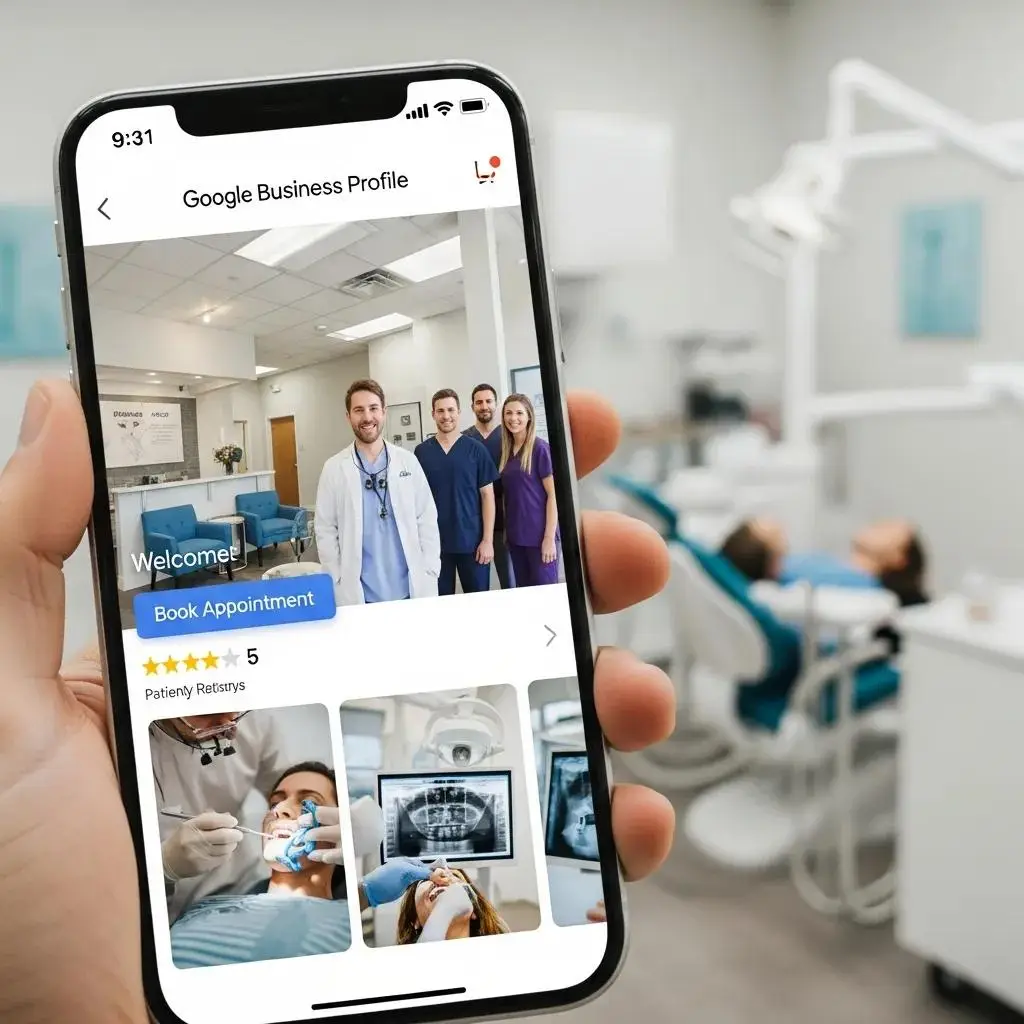
Visual content and descriptions play a significant role in attracting potential patients. Here are some optimization tips:
- Importance of High-Quality Images: Use professional photos of your practice, staff, and services to create a welcoming impression.
- Using Videos Effectively: Consider adding videos that showcase your practice, patient testimonials, or educational content about dental procedures.
- Crafting Compelling Descriptions: Write clear and engaging descriptions that highlight your services, specialties, and unique selling points.
Optimizing your GBP with high-quality media and engaging descriptions can significantly enhance patient interest and engagement.
How Can Dental Practices Leverage Patient Reviews to Boost Google Maps Success?

Patient reviews are a powerful tool for improving your Google Maps ranking and building trust with potential patients. By actively managing and responding to reviews, dental practices can enhance their online reputation.
What Are Proven Strategies for Generating More 5-Star Dental Reviews?
To encourage patients to leave positive reviews, consider the following strategies:
- Timing and Follow-Up: Ask for reviews shortly after a positive experience, such as after a successful treatment.
- Incentives for Reviews: Be cautious with incentives; while small tokens of appreciation are acceptable, avoid offering incentives explicitly in exchange for positive reviews, as this violates Google’s policies.
- Utilizing Social Media: Promote your review requests on social media platforms to reach a broader audience.
Implementing these strategies can help you generate more positive reviews, which can improve your Google Maps ranking.
How to Manage and Respond to Dental Reviews with HIPAA Compliance?
Managing reviews while adhering to HIPAA regulations is crucial for maintaining patient confidentiality. Here are some best practices:
- Understanding HIPAA Regulations: Familiarize yourself with HIPAA guidelines to ensure compliance when responding to reviews.
- Crafting Appropriate Responses: Respond to reviews professionally and avoid disclosing any personal health information.
- Handling Negative Reviews: Address negative feedback constructively and offer to resolve issues privately to maintain a positive reputation.
By managing reviews effectively and in compliance with regulations, dental practices can enhance their online presence and patient trust.
What Is Premier Dental SEO’s Four-Pillar System and How Does It Enhance Google Maps Optimization?
Premier Dental SEO offers a unique four-pillar system designed to optimize dental practices for Google Maps success. This system focuses on authority, content, technical excellence, and user experience to drive predictable patient growth.
How Does the Four-Pillar System Integrate AI-Driven Search and LLM Visibility?
The four-pillar system incorporates AI-driven search strategies to enhance visibility on Google Maps. By leveraging advanced algorithms and machine learning, practices can optimize their content for better search performance. This integration ensures that dental practices remain competitive in an evolving digital landscape.
Why Does This System Deliver Superior Results Compared to Traditional Agencies?
Premier Dental SEO’s four-pillar system has demonstrated superior results compared to traditional SEO methods. Key advantages include:
- Quantifiable Results: Practices using this system have reported significant increases in patient inquiries and appointments.
- Client Testimonials: Satisfied clients highlight the effectiveness of the system in improving their online visibility.
- Long-Term Benefits: The focus on sustainable growth ensures that practices continue to attract patients over time.
By adopting this innovative approach, dental practices can achieve lasting success in their local SEO efforts.
How Can Dental Practices Prepare for AI-Driven Search and Voice Optimization on Google Maps?
As search technology evolves, dental practices must prepare for AI-driven search and voice optimization. Understanding these trends is essential for maintaining visibility on Google Maps.
What Are Semantic Content Strategies for LLM Visibility in Dental SEO?
Semantic content strategies focus on creating content that is easily understood by AI and LLMs (Large Language Models). Key strategies include:
- Importance of Semantics in SEO: Use clear and concise language that accurately conveys your services and expertise.
- Creating Entity-Rich Content: Incorporate relevant entities and keywords to enhance the semantic relevance of your content.
- Examples of Successful Strategies: Analyze competitors’ content to identify effective semantic strategies that can be adapted for your practice.
Implementing these strategies can improve your practice’s visibility in AI-driven search results.
Research highlights the growing importance of AI-powered systems like LLMs in shaping the future of dental semantic search.
AI-Powered Dental Semantic Search Engines
DentQA is a question-answering system built upon an LLM—GPT3.5. GPT 3.5 is OpenAI’s LLM that currently drives the version of ChatGPT that is accessible to the public.
An artificial intelligence‐based dental semantic search engine as a reliable tool for dental students and educators, K Prakash, 2024
How to Optimize Dental Practice Content for Voice Search and AI Summaries?
Voice search is becoming increasingly popular, and optimizing your content for this format is essential. Consider the following techniques:
- Voice Search Trends: Understand common voice search queries related to dental services and tailor your content accordingly.
- Structuring Content for Voice Queries: Use clear headings and bullet points to make your content easily scannable for voice search.
- Utilizing AI Summaries: Create concise summaries of your services that can be easily read by AI systems, enhancing your chances of appearing in voice search results.
By optimizing for voice search, dental practices can stay ahead of the curve and attract more patients.
Further studies emphasize the critical factors for optimizing content for voice search, highlighting the shift towards natural language processing.
Voice Search Optimization for Dental Practice Visibility
The goal of this study is to determine factors that should be used to gain visibility in search engines and ultimately optimize voice search. To be able to answer the research questions, six Swiss experts were selected and interviewed. Based on the interviews, the five most important factors for VSO (Voice Search Optimization) were determined and tested with 30 everyday questions on Google Home and Siri. The interviews revealed that the search behavior would change in the future, and therefore, websites should consider these recommendations and focus on natural language for their content.
The influence of digital assistants on search engine strategies: recommendations for voice search optimization, MK Peter, 2021
What Are Effective Internal Linking and Structured Data Strategies to Maximize Local SEO Impact?
Internal linking and structured data are critical components of a successful local SEO strategy. By implementing these techniques, dental practices can enhance their online presence and improve search rankings.
How to Implement LocalBusiness Schema and FAQPage Markup for Dental Practices?
Implementing structured data can help search engines better understand your content. Here’s how to do it:
- Benefits of Schema Markup: Using LocalBusiness schema can enhance your visibility in search results and improve click-through rates.
- Examples of Effective Implementation: Ensure your schema markup accurately reflects your services and location to maximize its effectiveness.
- Common Pitfalls to Avoid: Regularly check for errors in your structured data to ensure it is functioning correctly.
By effectively implementing structured data, dental practices can improve their chances of appearing in rich snippets and other enhanced search results.
What Are Best Practices for Internal Linking Between Google Maps and SEO Content?
Internal linking is essential for guiding users through your website and improving SEO. Consider these best practices:
- Creating a Cohesive Content Strategy: Ensure that your internal links connect relevant content, enhancing user experience and SEO.
- Enhancing User Experience: Use internal links to guide visitors to important pages, such as service descriptions and contact information.
- Improving SEO Performance: Strategically placed internal links can help distribute page authority and improve overall site rankings.
By following these best practices, dental practices can maximize their local SEO impact and improve their Google Maps visibility.